Valentine Teddy Bear: A Craft Fair Best-Seller
As an embroidery designer who has spent countless weekends behind a booth table, I have learned that not every cute design translates into a best-selling craft fair product. Some designs look charming on a screen but get lost in the chaos of a busy market. Others become instant magnets for customers, driving impulse buys and boosting average order value. Today, I am putting the Valentine Teddy Bear under the microscope to see if it has what it takes to elevate your handmade product lineup for the upcoming season.
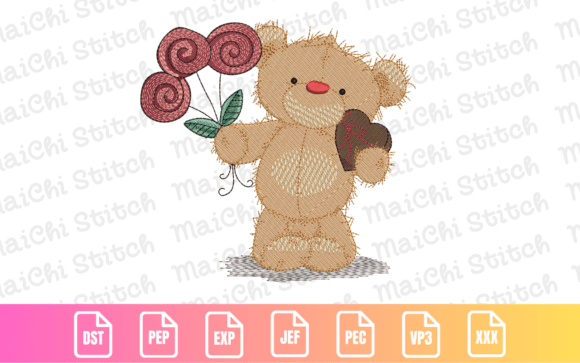
The first impression of this design is undeniably sweet and approachable. It does not try to be overly modern or minimalist; instead, it leans into a classic, plush-style aesthetic that screams comfort and affection. The bear holding a bouquet of swirl flowers and a chocolate treat creates an immediate narrative of gift-giving. For Etsy seller accounts and boutique makers, this visual cue is powerful. It tells the customer exactly what the item is for without them needing to read a description. In a crowded marketplace, clarity is king.
Visual Appeal and Market Placement
When evaluating where the Valentine Teddy Bear fits best, we must consider the "glance test." Can a customer walking past your booth understand the design in under three seconds? Absolutely. The silhouette of the bear is distinct, and the addition of the swirl flowers adds a decorative element that breaks up solid shapes, making the embroidery visually interesting from a distance. This makes it an excellent candidate for items that hang or drape, such as tote bags and aprons.
For a tote bag design, this bear works beautifully as a central focal point. The plush style suggests softness, which pairs well with canvas or cotton bags. If you are selling at a Valentine’s market, placing this on a neutral-colored bag allows the thread colors to pop. However, be mindful of the background. If you choose a dark fabric, ensure your digital embroidery file includes enough satin stitches or light-colored threads to maintain contrast. A muddy design on a navy or black bag will fail to capture attention.
Product Versatility for Small Shop Owners
Beyond tote bags, this design shines on kitchen textiles. Apron embroidery is a huge category for handmade sellers, and a teddy bear holding sweets fits the cozy, domestic vibe perfectly. Imagine this stitched on the bib of a flour-sack towel or a heavy-duty canvas apron. It appeals to buyers looking for gifts for bakers, teachers, or new parents. Similarly, tea towel embroidery offers a lower price point entry for customers who want a small token of affection. The key here is placement. Centering the bear on a tea towel creates a balanced, premium look that justifies a higher price than a simple corner motif.
Another strong contender is the embroidered patch. Patches are low-commitment purchases for customers browsing your booth. Because the Valentine Teddy Bear has defined edges and a self-contained shape, it translates well to a patch format. You can sell these as add-ons to jackets, backpacks, or pencil cases. Just ensure that your machine embroidery design has a proper border or satin edge to prevent fraying when cut.
Production Practicality and Technical Notes
From a production standpoint, efficiency is vital for small shop product lines. You need designs that are repeatable and reliable. Before committing to a large batch, you must review the technical specs of the digital embroidery file. Since the description mentions a "plush-style" bear, there may be areas of dense fill stitches. High stitch density can cause puckering on lightweight fabrics like voile or thin cotton. Always use the appropriate stabilizer. For knits or stretchy materials used in caps or pouches, a cut-away stabilizer is non-negotiable to maintain the integrity of the design after washing.
Pay close attention to the tiny details. The swirl flowers and the chocolate treat likely involve small satin stitches or fine detail work. If you are stitching this on a textured fabric, such as a waffle-weave towel or a rough linen, these fine details may get lost. Test the design on scrap fabric that matches your final product material. If the chocolate treat looks like a blob on your test run, you may need to simplify the design or increase the size. Speaking of size, confirm the recommended hoop size before purchasing. If the design is too large for a standard 4x4 hoop, you will be limited in the products you can offer, such as small pouches or baby onesies.
Avoiding Common Pitfalls
One common mistake with character designs is underestimating the impact of fabric texture. A plush bear looks soft, but if stitched on a highly textured surface, the definition of the face and eyes can disappear. For best results, use smooth, tightly woven fabrics for the main body of the bear. If you are creating caps, remember that curved surfaces distort designs. The Valentine Teddy Bear should be placed carefully on the front panel, avoiding the seams where the curvature changes drastically. A distorted bear face is not a selling point.
Additionally, consider the color palette. While the design is festive, avoid using too many similar shades of brown or pink, which can blend together from a distance. High contrast between the bear, the flowers, and the background fabric ensures the design reads clearly. This is crucial for both physical booth displays and online listings. When creating a printable mockup for your Etsy store, ensure the lighting highlights the texture of the stitches. Flat, shadowless photos do not convey the quality of commercial embroidery.
Boosting Brand Consistency and Sales
Integrating the Valentine Teddy Bear into your product line can strengthen your brand identity if you position it correctly. It signals warmth, tradition, and care. Use this design to create cohesive sets. For example, offer a matching tote bag and tea towel set. Bundling increases the perceived value and encourages larger purchases. For design assets and marketing, use the bear in lifestyle shots that evoke emotion. Show the tote bag being held by someone receiving flowers, or the apron worn while baking cookies. Context sells the dream, not just the stitch.
Finally, always verify the licensing terms. As a professional, you must confirm that the embroidery file comes with commercial rights allowing you to sell the finished product. Never assume. Check the designer’s terms regarding the number of physical items you can produce. Compliance protects your business and respects the creator’s work.
In conclusion, the Valentine Teddy Bear is a strong contender for your Valentine’s Day collection. It balances cuteness with commercial viability, offering versatility across multiple product types. By paying attention to fabric choice, stabilizer selection, and strategic placement, you can turn this charming design into a profitable staple for your craft fair booth and online store. Test it, refine it, and let it bring a touch of sweetness to your sales.